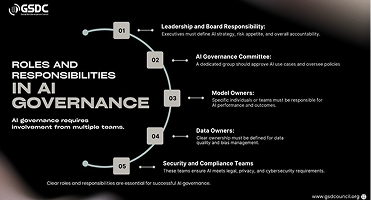
Institutions rushing to deploy AI without governance frameworks are accumulating not only model risk, but structural risk to their entire investment process. In the absence of clear standards around data lineage, permissioning, and model oversight, every new AI use case adds another opaque layer to the stack—harder to audit, harder to explain to regulators and LPs, and harder to unwind when something goes wrong. What looks like short-term efficiency can quickly become a hidden liability: inconsistent outputs across desks, undocumented prompts driving material decisions, and fragmented records that cannot be reconstructed under regulatory scrutiny. For institutional investors, this is not an abstract compliance concern; it directly affects trading integrity, valuation processes, and the defensibility of investment decisions. A disciplined AI governance framework—covering model selection, data controls, monitoring, and auditability—is now baseline infrastructure, not an optional extra, for any firm that expects to scale AI from experiment to production.